

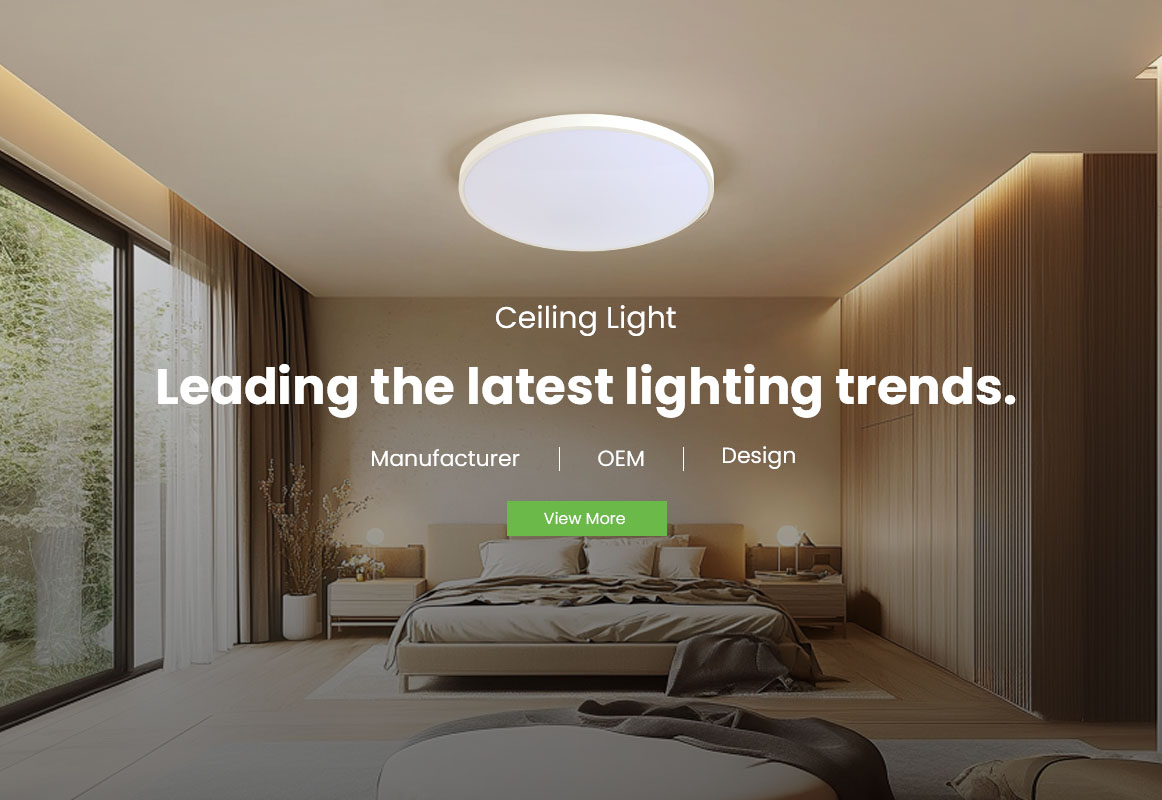
How To Change Led Ceiling Light?
Changing an LED Ceiling Light looks simple when there is only one room involved. For contractors, hotel maintenance teams, apartment renovation buyers, and lighting distributors, the real challenge appears when dozens or hundreds of ceiling lights need to be replaced under a fixed schedule. If the new lamp does not match the original wiring, mounting position, ceiling opening, brightness level, or sensor requirement, a small replacement job can quickly become site rework.
For B2B lighting projects, replacing an LED ceiling light should begin with one question: can the new fixture fit the existing installation condition with less adjustment? This is especially important in hotels, corridors, residential buildings, kitchens, bathrooms, offices, and commercial service areas where downtime, labor cost, and installation consistency all matter.
Replacement Starts With The Existing Ceiling Condition
Before removing the old light, the installer should check the ceiling surface, wiring position, mounting base, lamp diameter, and available height. Many replacement problems happen because the new fixture is selected only by wattage or appearance. Once workers reach the site, they may find that the base does not cover the old screw marks, the lamp body is too large, or the wiring exit does not align well.
Surface-mounted ceiling lights are often easier to handle in renovation projects because they do not always require a deep recessed opening. This can help contractors replace old fixtures faster, especially in finished rooms where cutting the ceiling again would increase dust, labor, and repair work.
We are RUISHUO, and our surface-mounted sensor ceiling light is designed with a lightweight structure and surface-mounted installation. For project buyers, this makes it practical for replacement work where the goal is to upgrade lighting without turning every room into a construction area again.
Match Wattage And Light Effect Before Installation
A common mistake in LED ceiling light replacement is assuming that higher wattage always gives a better result. In reality, the right wattage depends on room size, ceiling height, use area, and expected brightness. A hotel corridor, bathroom, kitchen, office room, and storage area do not need the same lighting effect.
The ESC502 ceiling light offers 15W, 24W, and 36W options, giving buyers room to match different spaces under one product direction. This is useful for bulk projects because the buyer can keep a consistent lamp style while adjusting power by area.
Color temperature also matters. Warm light may work better for guest rooms or residential spaces. Neutral or cooler light may be preferred for service areas, kitchens, corridors, or commercial rooms. With color temperature options from 2700K to 5000K and CRI above 80, buyers can plan the lighting atmosphere more carefully instead of replacing every room with the same effect.
Sensor And Emergency Functions Need Early Planning
Changing an LED ceiling light becomes more complicated when the old fixture has no sensor but the new one does, or when the project needs emergency lighting support. These features should not be added casually at the end of procurement.
Radar control can help improve convenience in corridors, public areas, and spaces where automatic response is useful. Emergency lighting function can also support projects that need lighting backup in specific areas. For contractors, these features need to be checked with wiring conditions and project requirements before installation starts.
If the site team does not confirm these details early, installation may slow down. Workers may need to check control settings, explain usage to the property team, or adjust the lamp position so the sensor works correctly in the room. A good replacement plan should include function review, not only lamp replacement.
Avoid Rework By Checking Size And Coverage
When replacing ceiling lights in bulk, size control is important. If the new lamp is too small, old marks may remain visible on the ceiling. If the lamp is too large, it may interfere with beams, ceiling edges, ventilation outlets, or nearby fittings.
The Surface-Mounted Sensor Ceiling Light comes in several sizes, including ∅250 × H75mm, ∅285 × H85mm, and ∅380 × H85mm. For contractors, this gives more flexibility when matching old ceiling positions or different room types. The 120° beam angle can also help spread light across the room more evenly.
Before confirming a bulk order, buyers should check at least one sample in the real installation area. This helps confirm whether the lamp covers the old position, whether the brightness is suitable, and whether the final ceiling look is clean enough for project handover.
Bulk Replacement Needs Clear Site Workflow
For one lamp, changing an LED ceiling light may take only a short time. For a whole building, the workflow matters more. The installation team needs to turn off power, remove the old fixture, check wiring, fix the new mounting base, connect wires safely, secure the lamp body, test the light, and clean the site.
If the lamp structure is simple and the mounting method is clear, workers can repeat the process faster from room to room. This is important for hotels, apartments, schools, offices, shopping malls, and real estate projects where installation teams need to finish many rooms with consistent results.
Lighting distributors should also care about packing and model identification. When different wattages or sizes are shipped together, clear labeling can prevent workers from installing the wrong lamp in the wrong area.
Conclusion
Changing an LED ceiling light is not only a maintenance task. In B2B projects, it affects installation speed, labor cost, room downtime, lighting consistency, and final project acceptance. The safest replacement plan checks the existing ceiling condition, wattage, color temperature, lamp size, wiring, sensor function, and emergency lighting requirement before the work begins.
For buyers preparing hotel renovation, apartment lighting replacement, corridor upgrades, or commercial ceiling light projects, the best starting point is the site condition. Check the old lamp size, ceiling surface, wiring position, and room function first. Then it becomes easier to choose a ceiling light that installers can replace cleanly and repeat across many rooms.
If your project involves bulk LED ceiling light replacement, we can review the room type, current fixture size, required wattage, color temperature, sensor needs, and order quantity with you before selection. A clearer replacement plan can help the installation team finish faster and avoid unnecessary ceiling rework.
Previous: How To Pick A Linear Light?